

Quick answer: Digital marketing is the work of attracting, converting and keeping customers through online channels: search engines, websites, social media, email, paid ads, creators and affiliates. For a beginner, it comes down to three skills: getting the right people’s attention, turning that attention into a sale or lead, and measuring what worked so you can do more of it. You can learn the basics for free in about 90 days using tools like Google Search Console, GA4, Meta Business Suite and Canva.
This guide covers what digital marketing actually is in 2026, the nine main channels and how they fit together, what has changed recently, the numbers worth tracking, and a 90-day plan to go from zero to running your own small campaigns. No jargon you won’t need, and no theory you can’t use.
What is digital marketing, in plain terms?
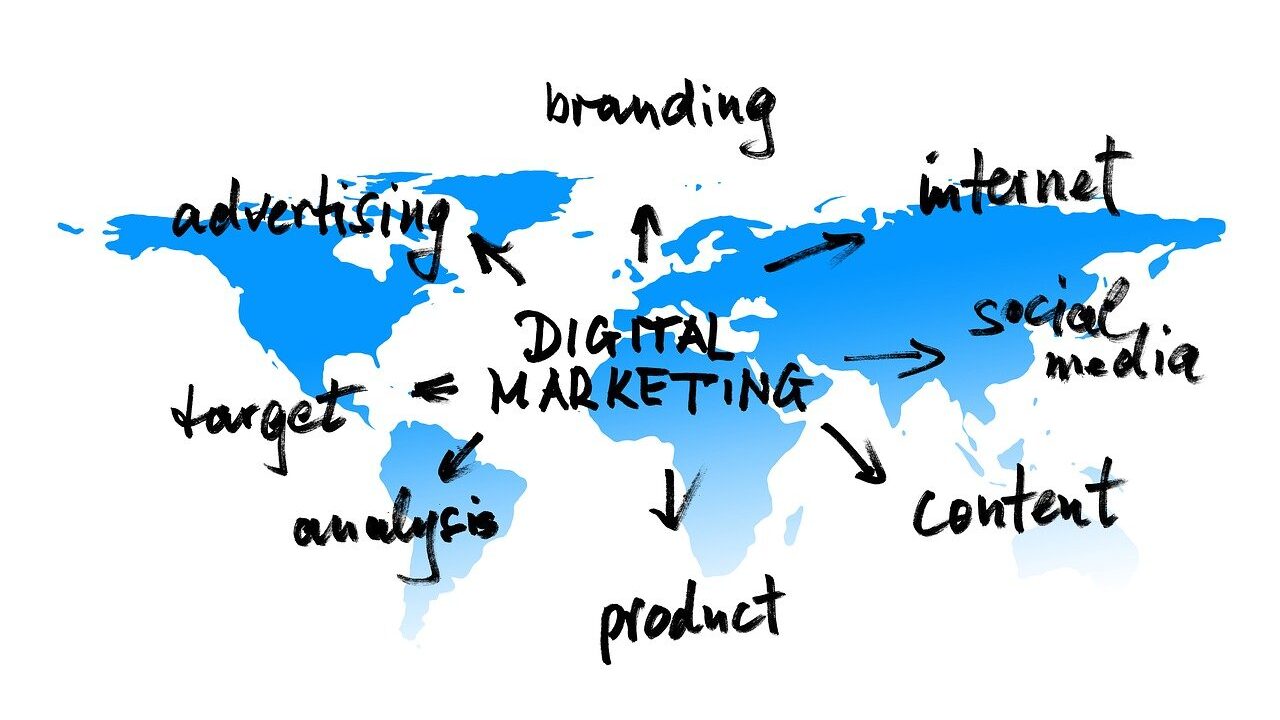
Digital marketing is any marketing that happens on a screen connected to the internet. A Google search result, an Instagram Reel, a WhatsApp broadcast from a local shop, a YouTube pre-roll ad and a newsletter in your inbox are all digital marketing.
Unlike newspapers, hoardings or TV, almost everything can be targeted and measured. You can show an ad only to people in Pune interested in yoga, and see how many clicked, signed up or paid.
The audience is also enormous. According to the DataReportal Digital 2026 Global Overview Report, there were 6.04 billion internet users worldwide as of October 2025 (73.2% of the world’s population) and 5.66 billion social media user identities. In India alone, DataReportal’s Digital 2026 India report counts 1.03 billion internet users and 500 million social media user identities, with YouTube’s ad tools reporting an ad reach of 500 million people in the country.
Money has followed attention. IAB’s 2025 Internet Advertising Revenue Report, compiled by PwC, put digital ad revenue at $294.6 billion in 2025, up 13.9% on the year. Social media ($117.7 billion, up 32.6%) overtook search ($114.2 billion) as the largest category, and creator advertising reached $37 billion.
What to do:
- Write down one business or idea you want to market (your own, a friend’s shop, or a pretend brand). Every exercise below works better with a real example.
- List where your target customer already spends time online. That list is the start of your channel plan.
The 9 main digital marketing channels
Here is each channel in a sentence or two, then a comparison table.
- SEO (search engine optimisation): making your website show up in Google’s free results for searches your customers make. Slow to start, but traffic compounds. Our guide to SEO tactics that still work in 2026 goes deeper.
- Content marketing: blog posts, guides, videos and templates that answer your audience’s questions. Content feeds SEO, social and email.
- Organic social media: posting on Instagram, YouTube, LinkedIn, Facebook or X without paying for reach. In India, this usually means Reels and YouTube Shorts first.
- Paid search (PPC): Google Ads that appear when someone searches a specific term. You pay per click, and the person is already looking for a solution.
- Paid social: ads on Meta (Facebook and Instagram), YouTube, LinkedIn and others. You target people by interests, behaviour and demographics rather than by what they searched.
- Email and messaging: newsletters, welcome sequences and, in India especially, WhatsApp broadcasts. You own this list, which no algorithm can take away.
- Affiliate marketing: partners promote your product and earn a commission per sale. Or you become the affiliate and earn by recommending other people’s products.
- Influencer and creator marketing: paying or partnering with creators to reach their audience. Works well for consumer brands and new launches.
- Analytics: not a channel but the layer underneath all of them. Without measurement, you are guessing.
Channel comparison table
| Channel | Best for | Cost to start | Time to results | Skill level |
|---|---|---|---|---|
| SEO | Long-term, steady traffic from people searching | Low (time-heavy) | 3–12 months | Medium |
| Content marketing | Building trust and authority | Low | 2–6 months | Medium |
| Organic social | Awareness, community, local brands | Free | 1–3 months | Beginner |
| Paid search | Capturing ready-to-buy demand | Medium to high | Days | Medium |
| Paid social | Creating demand, launches, retargeting | Medium | Days to weeks | Medium |
| Email / WhatsApp | Repeat sales and nurturing leads | Free to low | Weeks (once you have a list) | Beginner |
| Affiliate | Pay-per-sale growth or earning commissions | Low | 1–6 months | Beginner to medium |
| Influencer / creator | Reach and social proof for consumer products | Low (barter) to high | Weeks | Beginner to medium |
| Analytics | Knowing what works | Free | Immediate | Medium |
Our recommendation: learn one “slow” channel (SEO or content) and one “fast” channel (Meta ads or Google Ads) together. The slow channel teaches you the audience; the fast channel teaches you what makes people click and buy.
What to do:
- Pick one slow and one fast channel from the table.
- Ignore the rest for your first 90 days. Depth beats a shallow tour of everything.
How the channels fit into a marketing funnel
A funnel is just the path from “never heard of you” to “paying customer” to “tells friends about you”. Every channel is stronger at one stage than the others.
- Awareness (top): organic social, short video, creator partnerships, paid social. Goal: get noticed by the right people.
- Consideration (middle): SEO content, YouTube explainers, comparison pages, retargeting ads. Goal: answer questions and build trust.
- Conversion (bottom): paid search, landing pages, offers, WhatsApp follow-ups. Goal: get the sale or sign-up.
- Retention: email, WhatsApp, loyalty offers. Goal: repeat purchases and referrals.
Example: a solo skincare brand in Jaipur posts Reels showing its products in use (awareness), writes a blog post on “best sunscreen for oily skin in Indian summers” (consideration), runs Meta retargeting ads to people who watched 50% of a Reel (conversion), and sends a WhatsApp message with a reorder link after 45 days (retention). Payment is by UPI on a simple checkout page, because that is how most of its customers prefer to pay.
What to do:
- Draw four boxes on paper: awareness, consideration, conversion, retention.
- Put one channel and one piece of content in each box for your chosen business.
- Find the weakest box. That is where your first effort should go.
What has changed in digital marketing recently?
If you are reading older guides, three shifts matter most.
1. AI answers now sit on top of search
Google’s AI Overviews summarise answers at the top of many results pages, and DataReportal notes Google says they reach over 2 billion monthly users. The same report found that only 80.3% of online adults used a search engine in the past month, the lowest figure in GWI’s series, while more than a billion people use generative AI tools each month. For beginners, this means writing clear, specific, well-structured content that AI tools can quote, not just content that ranks. The content marketing strategies that work now lean heavily on original examples and direct answers.
2. Short video is the default format
DataReportal reports that 94.6% of online adults watched online video in the past 30 days, and that social plus video platforms take over 2.5 hours of their day. In India, Reels and Shorts are often the first place a new customer meets a brand. You don’t need studio equipment; you need a phone, good light and a clear first two seconds. See our roundup of social media marketing trends for 2026 for formats that are working.
3. Privacy changes, but cookies are still in Chrome
For years, marketers were told third-party cookies in Chrome were about to disappear. That is no longer the plan. In April 2025, Google said it would not roll out a standalone prompt for third-party cookies, and in an October 2025 update it announced it was retiring most Privacy Sandbox technologies, including the Topics API and Protected Audience, while keeping its current approach of letting users manage cookies in Chrome settings. Users can still block cookies themselves, so the practical lesson holds: build your own email and WhatsApp lists, and set up proper conversion tracking.
What to do:
- Search a few questions in your niche and note which ones show an AI Overview and which sites it cites.
- Post three short vertical videos this month, even rough ones, and check their retention graphs.
- Add an email or WhatsApp opt-in to whatever site or profile you have.
Key digital marketing metrics beginners should track
There are hundreds of metrics. These are the ones that answer “is this working?”
| Metric | What it tells you | Where to find it |
|---|---|---|
| Impressions and reach | How many people saw your content or ad | Search Console, Meta Business Suite |
| CTR (click-through rate) | Whether your title, thumbnail or ad makes people click | Search Console, ad platforms |
| Conversion rate | Share of visitors who sign up or buy | GA4 (key events), ad platforms |
| CPC and CPA | What you pay per click and per customer or lead | Google Ads, Meta Ads Manager |
| ROAS | Revenue earned per rupee or dollar of ad spend | Ad platforms, your sales data |
| Engagement and retention | Whether people watch, save, share or return | Instagram/YouTube insights, GA4 |
| Email open and click rate | How healthy your list is | Your email tool |
What to do:
- Pick one “north star” number for your business (sign-ups, sales or leads) and two supporting metrics.
- Check them once a week, not every hour. Weekly trends matter more than daily noise.
Free tools to start with
You can learn almost everything with free tools. Paid tools help later, not on day one.
- Google Search Console: which searches show your site, your clicks, CTR and indexing problems.
- Google Analytics 4 (GA4): visitor behaviour, traffic sources and conversions.
- Google Business Profile: essential for any local business that wants to show on Maps.
- Meta Business Suite: schedule Facebook and Instagram posts, see insights and manage messages.
- Canva: social graphics, thumbnails and simple video edits.
- Google Trends and Keyword Planner: what people search for and how interest changes over time.
- WhatsApp Business app: catalogues, quick replies and broadcast lists for small Indian businesses.
What to do: set up Search Console, GA4 and Meta Business Suite this week, even on a free WordPress or Blogger site. Real data, however small, teaches more than any course.
Skills and free certifications to learn
Certificates won’t get you clients or a job on their own, but they give your learning a structure. These are free to study:
- Google Skillshop: free training and certification exams for Google Ads (Search, Display, Video, Shopping and more) and Google Analytics.
- Google’s Fundamentals of Digital Marketing: a free beginner course (formerly part of Digital Garage) that covers the basics across channels.
- HubSpot Academy: free certification courses in Inbound Marketing, Digital Marketing, Content Marketing, SEO and Social Media Marketing.
- Meta Blueprint: the training courses are free; the official Meta Certified exams are paid, so take the free courses first and decide later.
Beyond certificates, the core skills are: writing (headlines, captions, ad copy), basic data reading (spreadsheets and dashboards), understanding customer psychology, and using AI tools well for research and first drafts.
Your first 90 days: a learning and practice plan
This plan assumes 5–7 hours a week. Each phase mixes learning with doing, because practice is where the real understanding happens.
| Weeks | Learn | Practise | Output by end of phase |
|---|---|---|---|
| 1–2 | Funnel basics, channel overview (Google’s Fundamentals course) | Pick a real or practice business; set up Search Console, GA4, Meta Business Suite | One-page funnel map and working tracking |
| 3–4 | SEO basics and keyword research (HubSpot SEO course) | Find 10 keywords with Google Trends and Keyword Planner; write 2 articles | 2 published articles targeting real questions |
| 5–6 | Short video and organic social | Post 3 Reels or Shorts a week; study retention and saves | 9–12 videos and a note on which hook worked |
| 7–8 | Email/WhatsApp and landing pages | Create a simple freebie (checklist or template) and an opt-in page | First subscribers and a 3-email welcome sequence |
| 9–10 | Paid ads (Google Skillshop Search or Meta Blueprint courses) | Run a small test campaign with a strict daily budget | Your first CTR, CPC and CPA numbers |
| 11–12 | Analytics and reporting | Build a one-page monthly report in Google Sheets or Looker Studio | A report showing what worked and the next three changes |
90-day checklist:
- ☐ Tracking set up (Search Console, GA4, Meta)
- ☐ 2+ articles published
- ☐ 9+ short videos posted
- ☐ Email or WhatsApp list started
- ☐ One paid test campaign run and documented
- ☐ One free certification completed
- ☐ One-page report written in your own words
Frequently asked questions
Can I learn digital marketing on my own for free?
Yes. Google Skillshop, Google’s Fundamentals of Digital Marketing course, HubSpot Academy and Meta Blueprint’s courses are free to study. Pair them with free tools like Search Console and GA4 and a real project, and you can learn the basics without paying for a course.
How long does it take to learn digital marketing?
You can understand the basics in about three months with 5–7 hours a week. Becoming genuinely skilled in one channel, such as SEO or Meta ads, usually takes six months to a year of hands-on practice.
Which digital marketing channel should a beginner start with?
Start with one channel that compounds (SEO or content) and one that gives fast feedback (Meta ads or Google Ads). Choose based on where your audience spends time: Reels-first audiences suit social, while people searching for solutions suit SEO and paid search.
Is digital marketing still worth learning with AI?
Yes. AI tools speed up research, drafts and reporting, but someone still has to choose the audience, the offer, the channel and the message, and judge the results. Marketers who use AI well are more valuable, not less.
Final thoughts
Digital marketing looks complicated because of the number of channels, but the job is simple: reach the right people, give them a reason to act, and measure the result. Pick two channels, set up free tracking, and follow the 90-day plan with a real project. By the end, you will have something most beginners don’t: your own numbers and a clear idea of what to do next.